HELIOS ONE / FIELDLABCHAPTER 03 OF 10
Explore all 10 chapters
03 / THE SYSTEM EXPLAINED

At the interface
of light and life.

Five elements make the experiment possible. Their interaction—not any single component in isolation—is what FieldLab is trying to understand.

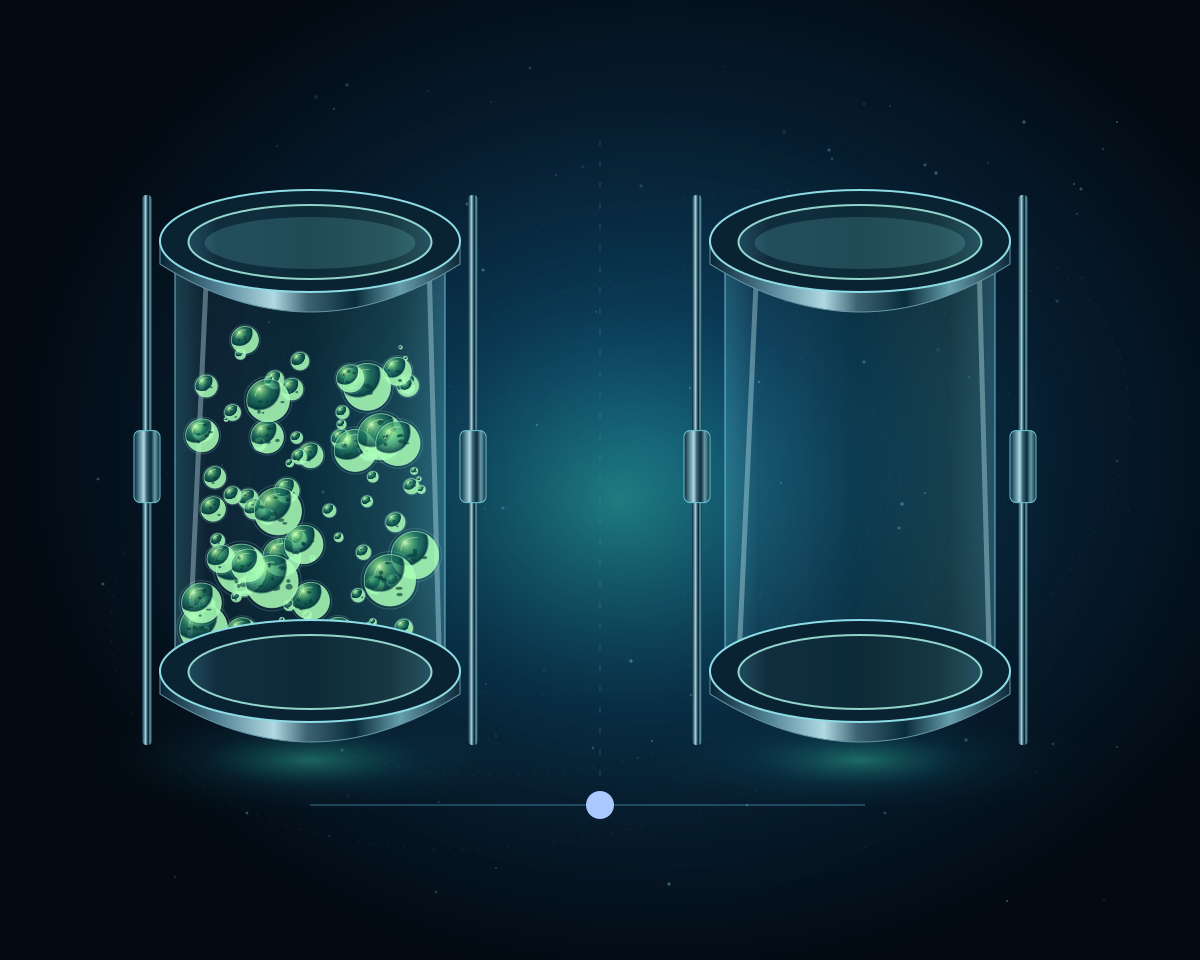
CONCEPT ILLUSTRATION
Not the actual apparatus or measured data.
HELIOS ONE / THE LIVING-ENERGY PATHWAY

Absorb. Capture.
Store. Ready for use.

Follow the proposed route from a living culture to an external circuit, a storage module, and a low-power device. The sequence plays automatically.

CONCEPT ANIMATION · NOT A LIVE EXPERIMENTCell motion, circuit flow and charge level are illustrative.

Absorb light

Automatic sequence · 4 illustrated stages.

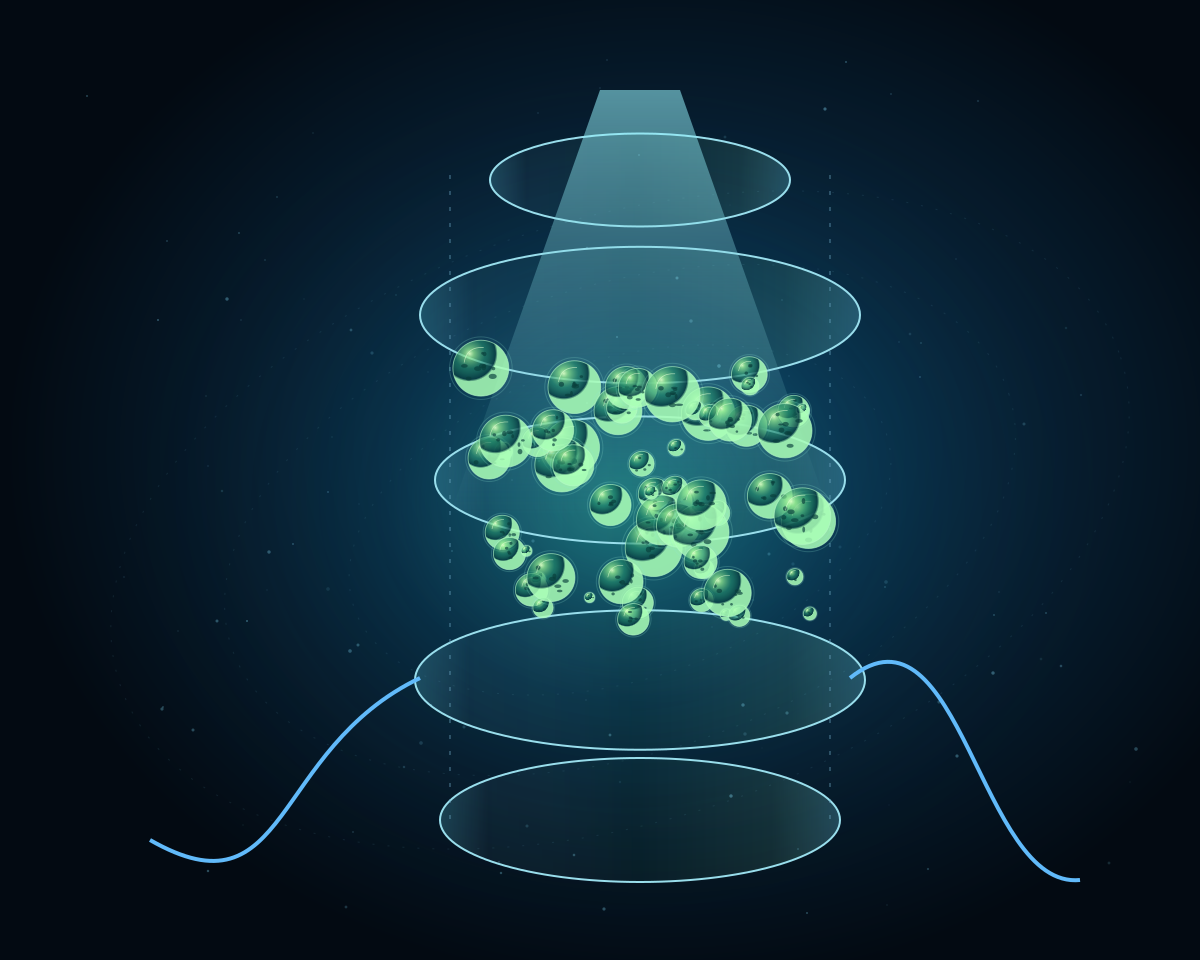
Illustrated photosynthetic cells absorb light. Their motion and morphology are conceptual, not microscopy of the Helios culture.

Where Helios stands: FieldLab reports an initial electrical response during a live-culture test on October 15, 2026. Biological attribution, repeatability, storage charging and useful device power have not been established. The illustration is not a construction diagram, a measured trace, or a prediction of charging speed.

Storage belongs outside the living cells. The proposed pathway places power management between the electrode circuit and a separate capacitor or battery. The return conductor completes the external circuit. Usable output would still have to exceed conversion, storage and operating losses.

Research context: published biophotovoltaic studies. Engineering context: energy-harvesting power management and external storage. This reference is not a selected Helios component, endorsement, or claim that the circuit’s operating requirements have been met.

One apparatus. Five connected elements.

Helios One brings together a living photosynthetic culture, illumination, water-based surroundings, electrodes, and an electrical measurement system. These are the components described in the public announcement. Species, electrode materials, dimensions, wiring, and culture conditions have not been publicly specified here.

01LightEnergy input to investigate
02Living cultureBiological component
03Water / mediumChemical surroundings
04ElectrodesMaterial interface
05MeasurementResponse under test
ILLUSTRATIVE SYSTEM MAP

The diagram is a conceptual map, not a circuit schematic, build recipe, disclosed proprietary architecture, or demonstration of a particular electron-transfer route.

The interface is the research problem.

Placing a living culture next to an electrode does not, by itself, identify how a signal reaches a meter. The response may involve the biology, the electrode surface, the surrounding medium, or several processes together. The purpose of controls is to distinguish those possibilities rather than select the most exciting one in advance.

In an external study, Chen and colleagues used structured electrodes to investigate the biological–electrode interface. Their work makes geometry an important research question; it does not tell us which geometry Helios One uses or what performance it can achieve.[3]

MaxwellX’s broader interest in geometry, fields, and interfaces gives this program a coherent place in the company. The connection is a research direction—not a claim that Casimir forces are generating the Helios response.

Explore each role.

INTERACTIVE EXPLAINER · NO EXPERIMENTAL DATA

Light is an input to account for.

A light-dependent response would be informative, but illumination can change more than biological activity. Its source, timing, and associated temperature change belong in the experimental record.

Why we are not drawing a settled electron pathway.

Published cyanobacterial electrochemistry shows that photosynthetic and respiratory processes can interact. Saper and colleagues studied a system in which both contributed to photocurrent, and used external bias for hydrogen production. That is a reminder to inspect the energy inputs and the actual mechanism of each apparatus.[2]

Helios One has not yet established which process explains its first reported response. A polished animation cannot answer that question. The motion on this site is an illustration of the research theme, not a real-time trace or a verified model of the October 15 test.

From a reading to an explanation.

Define the observable.

Record the instrument mode, units, timing, baseline, and connection to the apparatus. Preserve the original data before converting it into a plot.

Change one meaningful condition.

Select comparisons that can separate living-culture effects from electrode, medium, illumination, and instrument behavior.

Ask whether the explanation survives.

A biological interpretation becomes stronger only when it predicts a difference that suitable controls and repeat runs can test.

The next page explains the validation questions in more detail. It describes a proposed evaluation framework, not completed tests.

EVIDENCE / EXTERNAL RESEARCH

Go to the source.

These sources provide research context, not validation of Helios One or affiliation with MaxwellX.
[2] G. Saper, D. Kallmann, F. Conzuelo and colleagues. Live cyanobacteria produce photocurrent and hydrogen using both the respiratory and photosynthetic systems ↗. Nature Communications 9, 2168 (2018). DOI: 10.1038/s41467-018-04613-x.Mechanistic study of a different system; hydrogen production used an applied bias.
[3] X. Chen, J. M. Lawrence, L. T. Wey, L. Schertel, Q. Jing, S. Vignolini, C. J. Howe, S. Kar-Narayan and J. Z. Zhang. 3D-printed hierarchical pillar array electrodes for high-performance semi-artificial photosynthesis ↗. Nature Materials 21, 811–818 (2022). DOI: 10.1038/s41563-022-01205-5.External electrode-interface research. No equivalent MaxwellX performance is claimed.
STAY CLOSE TO THE EXPERIMENT

Be here for
what comes next.

Follow Helios One’s progress, ask a research question, or bring a specific problem to FieldLab.

Requests go to the MaxwellX team. Research updates are handled manually, not by an instant automated mailing list. No product preorder or investment is offered here.

Follow the public RSS feed ↗

Please do not send trade secrets, unpublished inventions, sensitive health information, or confidential files.

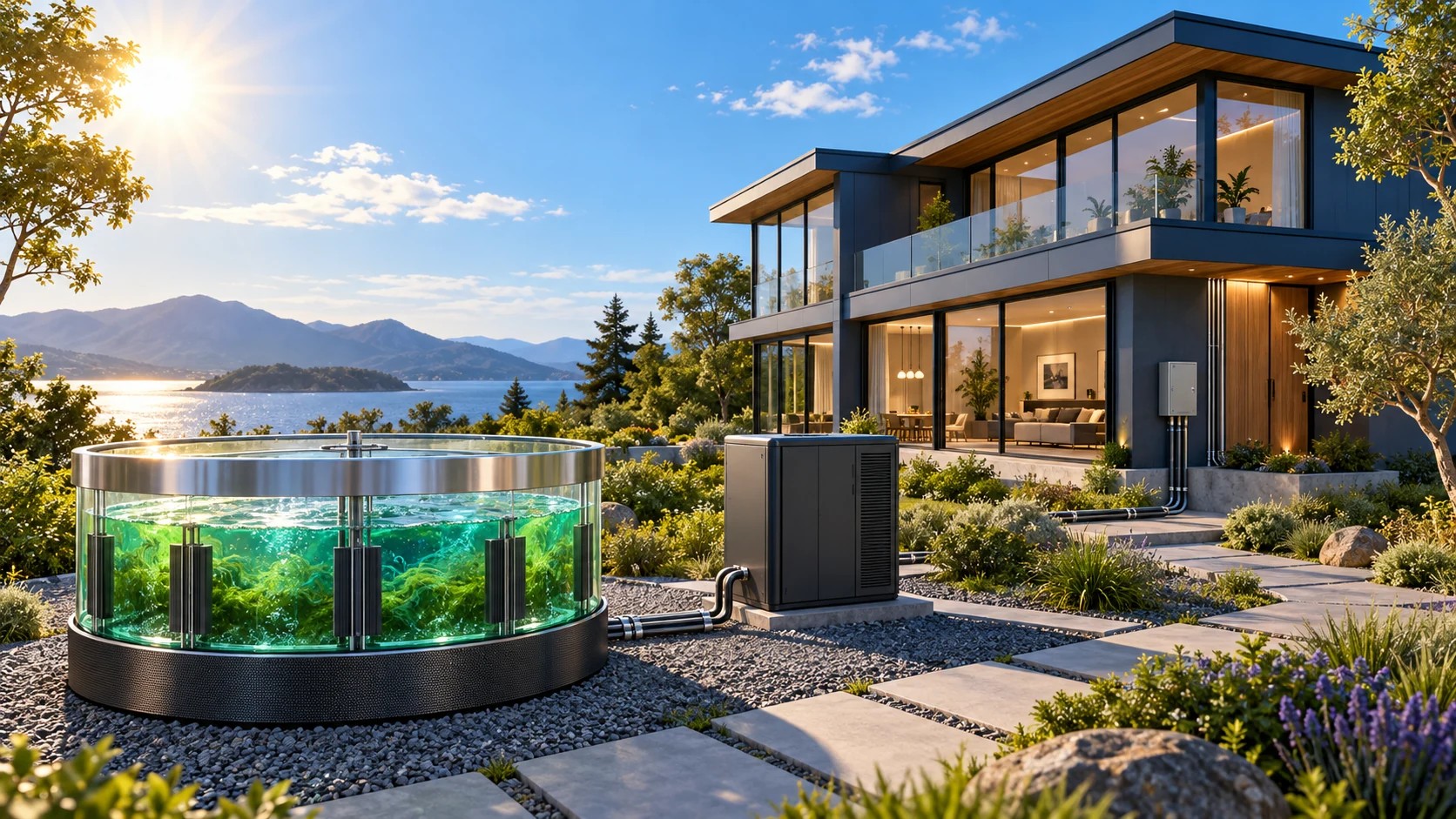
Future system concept: Helios, storage and a connected home
HELIOS ONE / THE OFF-GRID HORIZON

Sunlight. Storage.
A home beyond the grid.

Explore the proposed eight-foot living-energy tank, its animated process, the research frontier and the energy budget behind off-grid power.

Explore Helios energy →

Design concept. Off-grid output and efficiency remain development goals.